Updated
As many as 3% of American teens may be affected by adolescent idiopathic scoliosis, appearing alongside the growth spurt associated with the teen years. Scoliosis is an abnormal sideways curve to the spine.
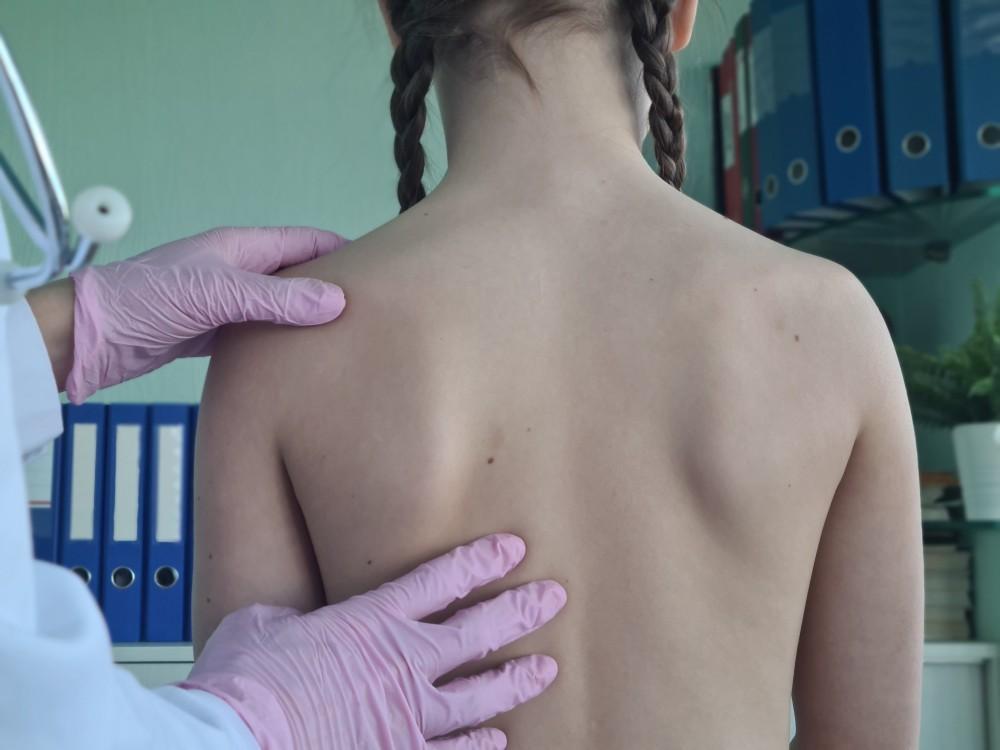
Mild curves may be monitored over time. We can evaluate your teen’s posture and discuss whether an exam, imaging or follow-up makes sense.
We’ve gathered five common signs to help you decide what to bring up at your teen’s next visit.
Five common signs of scoliosis in teens
The spine has front-to-back curves as part of its natural design. These are normal, helping the structure at the back of your body support forward weight over a common center of gravity.
Viewed straight on, though, the spine should form a straight line with no side-to-side variance. When this sideways curvature develops, it’s called scoliosis.
Teens sometimes develop scoliosis during their body’s rapid growth. It’s unclear why this happens for some people and not others ’ known as an idiopathic condition in medical terms.
The teen years are the most common time for scoliosis to develop, though it can be associated with neuromuscular conditions like cerebral palsy and muscular dystrophy. Five of the most common signs of adolescent scoliosis include:
1. Uneven shoulders
Sideways twists to the spine can alter your teen’s lateral body symmetry. Typically, the shoulders form an even line parallel to the ground when sitting or standing in balanced postures.
A teen with scoliosis may have some imbalance, a tilt from one side to the other. It may be barely noticeable in mild cases, or one shoulder blade may be more prominent along with the tilt.
2. Rib cage prominence
Since the upper body bases its support on the spine and its position, common signs of scoliosis include asymmetrical body features. The ribs can also show signs of sideways spinal curves, where one side of the body features a jutting rib cage.
3. Tilted waist
A belt or the waistline of a pair of pants could show a tilt that mirrors a change in the spine due to scoliosis. This tilt may seem like a natural teenage pose, but it won’t disappear when a patient stands straight.
4. Uneven hips
Sideways shifts of the lower spine can set hips at an uneven angle, which could be problematic if the tilt of the hips affects how your teen walks or runs, adding extra strain on the hip joints.
5. A longer leg
Potentially related to uneven hips, you might notice that one of your teen’s legs seems longer than the other. It could lead to a rocking gait or uneven wear on the soles of their shoes.
What to note before the visit
Write down what you or your teen first noticed, such as an uneven shoulder or a change in how clothes fit. Bring any school screening note, earlier exam or available spine images. Read when to ask about a child’s scoliosis for the next step.
A lack of symptoms
Scoliosis usually doesn’t cause complications or pain symptoms in its early stages. Without careful observation and medical intervention in the form of braces and other treatments, it’s possible, though rare, for a teen to develop breathing problems or chronic back pain.
Some teens may become concerned with their appearance if prominences and tilts become apparent.
For more information, see our guide for parents concerned about scoliosis.
Request an appointment with our office or call us at 310-437-7925.
Questions to ask your physician
- What could explain my teen’s uneven shoulders or ribs? Would an exam or X-ray help?
- How does remaining growth affect the choice between monitoring and bracing?
- When should we check the curve again, what might a brace or repeat imaging cost, and which new symptoms should prompt an earlier visit?