
On this page
Minimally Invasive Spine Surgery
Minimally invasive spine surgery offers effective relief for chronic back and neck pain with smaller incisions and quicker recovery. At Commons Clinic, Sanjay Khurana, MD, provides advanced procedures to treat various spine conditions with minimal disruption.
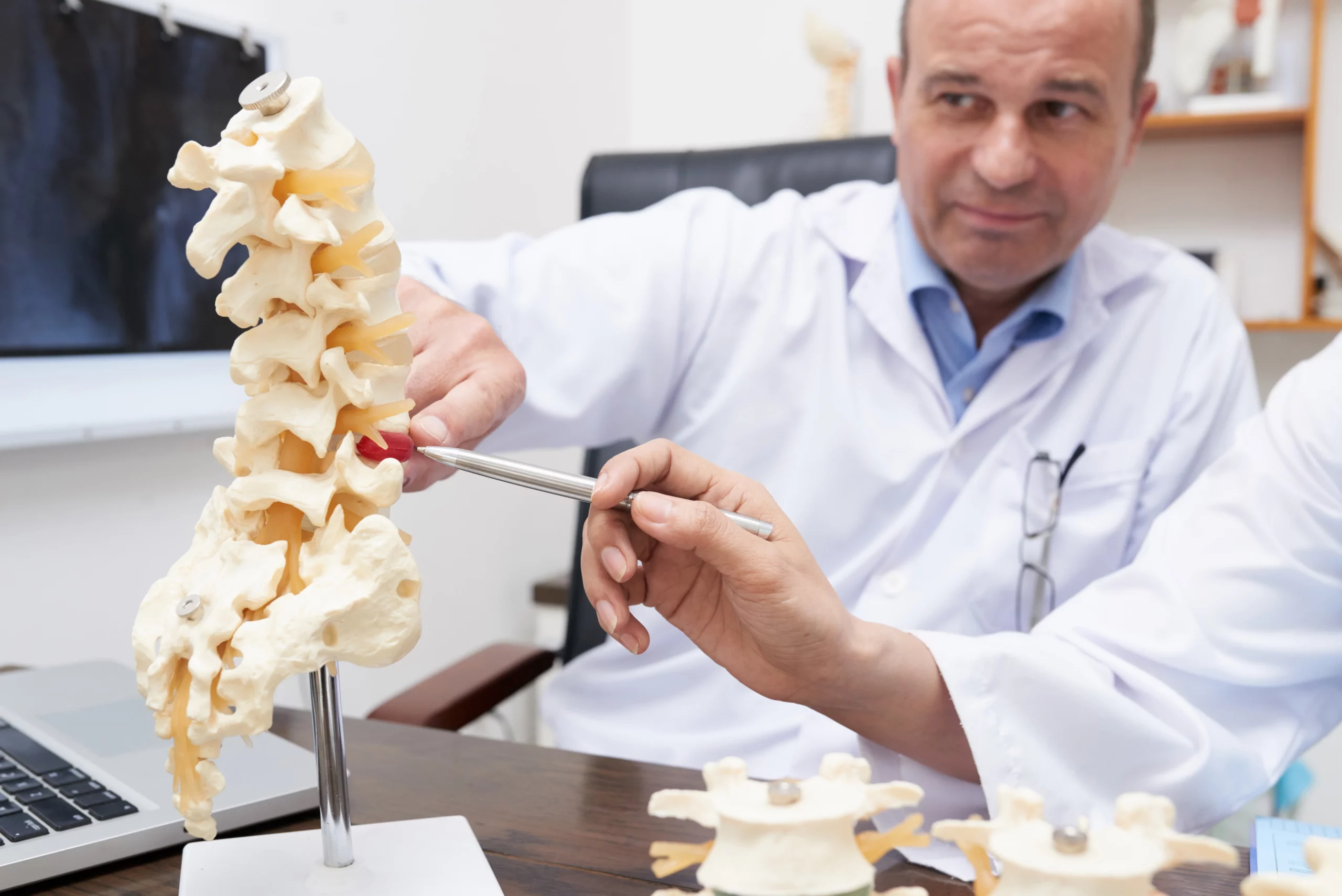
What is minimally invasive spine surgery?
Artificial disc replacement surgery is an orthopedic procedure that replaces a diseased or damaged vertebral disc with an artificial prosthesis. Artificial discs are made of materials like metal or plastic and prevent your vertebrae from rubbing up against each other.
Thanks to advanced surgical tools and anesthetics, the procedure presents few risks and provides long-lasting results.
How Does Minimally Invasive Spine Surgery Work?
Frequently Asked Questions
What conditions can benefit from minimally invasive spine surgery?
- Herniated discs
- Spinal stenosis (narrowing of the spinal canal)
- Spinal abnormalities (like scoliosis)
- Spinal instability
- Fractured vertebrae
- Spine tumors
You might also be a candidate for minimally invasive spine surgery if you have a spine infection and it interferes with your ability to work or exercise.
Are there different types of minimally invasive spine surgery?
Microscopic surgery
Microscopic surgery is a type of minimally invasive spine surgery that uses highly sensitive surgical microscopes to repair delicate areas of your spine with precision. Microscopic surgery allows for greater accuracy and improved treatment outcomes.
Endoscopic surgery
Endoscopic surgery is a type of minimally invasive spine surgery that uses an endoscope –– a thin tube with a light and a high-definition camera on the end. Dr. Khurana inserts the endoscope through small incisions in your skin and makes repairs using special surgical tools.
Robotic surgery
Robotic surgery is very similar to endoscopic surgery. The difference is that Dr. Khurana stands at a robotic console during the procedure. He uses the console to control “arms” that hold small surgical instruments, allowing him to make repairs.
What does minimally invasive surgery involve?
Dr. Khurana performs minimally invasive surgery at a hospital or a surgical facility. Before the operation begins, he administers general anesthesia that puts you to sleep.
Once you’re comfortable, Dr. Khurana makes a small incision just above the affected area of your spine. Then, he inserts small surgical tools through the incision using an endoscope, a microscope, or a robotic console to guide him.
After removing the diseased or damaged tissues and making the necessary repairs, Dr. Khurana removes the tools and closes the incision. Then, he moves you to a recovery room for observation until the anesthesia wears off.